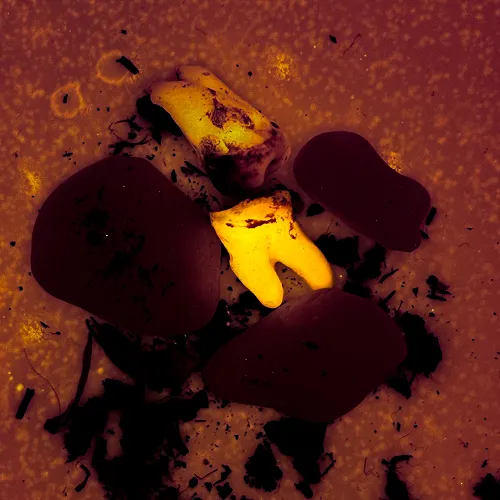
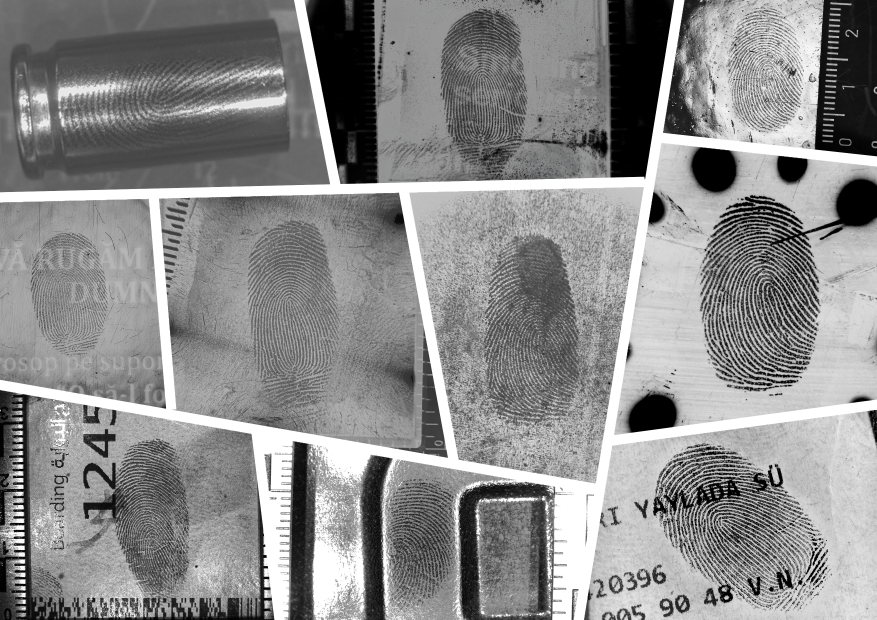
In forensic science, every trace matters, even the smallest ones. Sometimes traces that would solve a case or provide investigators with valuable leads are not visible to the naked eye. For this, forensic experts and crime scene investigators use different methods to make the invisible visible: chemical enhancement, powders, different lights and filters, forensic light sources etc.
Forensic light sources are light sources that help experts locate evidence that could be missed with the naked eye or standard white lights. The most commonly used forensic light sources (FLS) in crime scene investigations are UVA lights. This is because many body fluids contain naturally occurring fluorescent molecules, known as fluorophores, which emit visible light when exposed to UVA radiation. This natural fluorescence helps investigators locate and document biological evidence that may otherwise remain invisible to the naked eye.
When UVA light hits the stain, these molecules absorb the higher-energy ultraviolet radiation. Their electrons become excited, then quickly return to a lower-energy state and release part of that energy as longer-wavelength visible light. That emitted visible light is what we see as fluorescence.
In forensic body-fluid detection, fluids such as semen, saliva, urine, sweat, and vaginal fluids may show fluorescence because they contain various biological fluorophores, including proteins, enzymes, metabolites, flavins, porphyrins, and other organic molecules. Recent forensic spectroscopy studies show that different body fluids can produce different fluorescent signatures depending on their composition, fluorophore content, and age.
However, UVA light does not always deliver the results investigators hope for. It does not induce fluorescence in all stains or on all surfaces. Some traces simply refuse to “light up” under UVA because their fluorophores do not efficiently absorb this wavelength, or because any resulting fluorescence gets lost in poor contrast with the background.
Another limitation is that UVA is not particularly selective. It can make biological traces like body fluids visible, but it also tends to excite a wide range of unrelated materials at the crime scene from cleaning residues and fibers to adhesives and chemical contaminants. In other words, it sometimes makes the whole scene glow a little too enthusiastically, which can turn interpretation into a challenge rather than a shortcut.
This is where violet and blue light step in. These wavelengths can be more effective at exciting certain compounds, often producing stronger fluorescence and better contrast. For this reason, investigators typically rely on multiple light sources rather than a single wavelength, choosing the right “color of light” depending on what they are trying to reveal. But carrying so many light sources and filters is not practical for the crime scene investigators, it can be both heavy and pricy.
That is where multispectral imaging comes in.
Multispectral refers to imaging within 3 to 10 wavelength bands. Instead of using only visible light or UVA light, it captures images at specific frequencies across the electromagnetic spectrum. These wavelength bands are generally combined with different forensic-grade filters to detect the traces. This technology enables the detection of details and features invisible to the naked eye, and since they include up to 10 different bands of lights and different filters, investigators do not have to carry around multiple light sources, filters and consumables. Multispectral imaging devices save the investigators valuable time by making their job much easier and money by eliminating the need for consumables.
Multispectral imaging refers to imaging solutions that integrate multiple illumination wavelengths typically between 3 and 10 different bands within a single system. In other words, it is the name given to imaging technologies that combine several discrete wavelengths of light in one platform, allowing investigators to work across different parts of the spectrum without switching between separate devices.
Instead of relying solely on visible light or UVA illumination, multispectral systems capture and process data at specific points across the electromagnetic spectrum. These wavelength bands are then used together with forensic-grade optical filters to enhance the detection and visualization of trace evidence.
By bringing multiple wavelengths into a single imaging solution, multispectral technology provides a more flexible and efficient approach to forensic examination, enabling clearer visualization of details that would otherwise remain invisible to the naked eye.
In practical terms, multispectral imaging simplifies the investigator’s toolkit, saves valuable time in evidence collection, and reduces operational costs by minimizing dependence on consumable materials. It is essentially the “all-in-one” approach to forensic light examination, without the usual equipment overload.