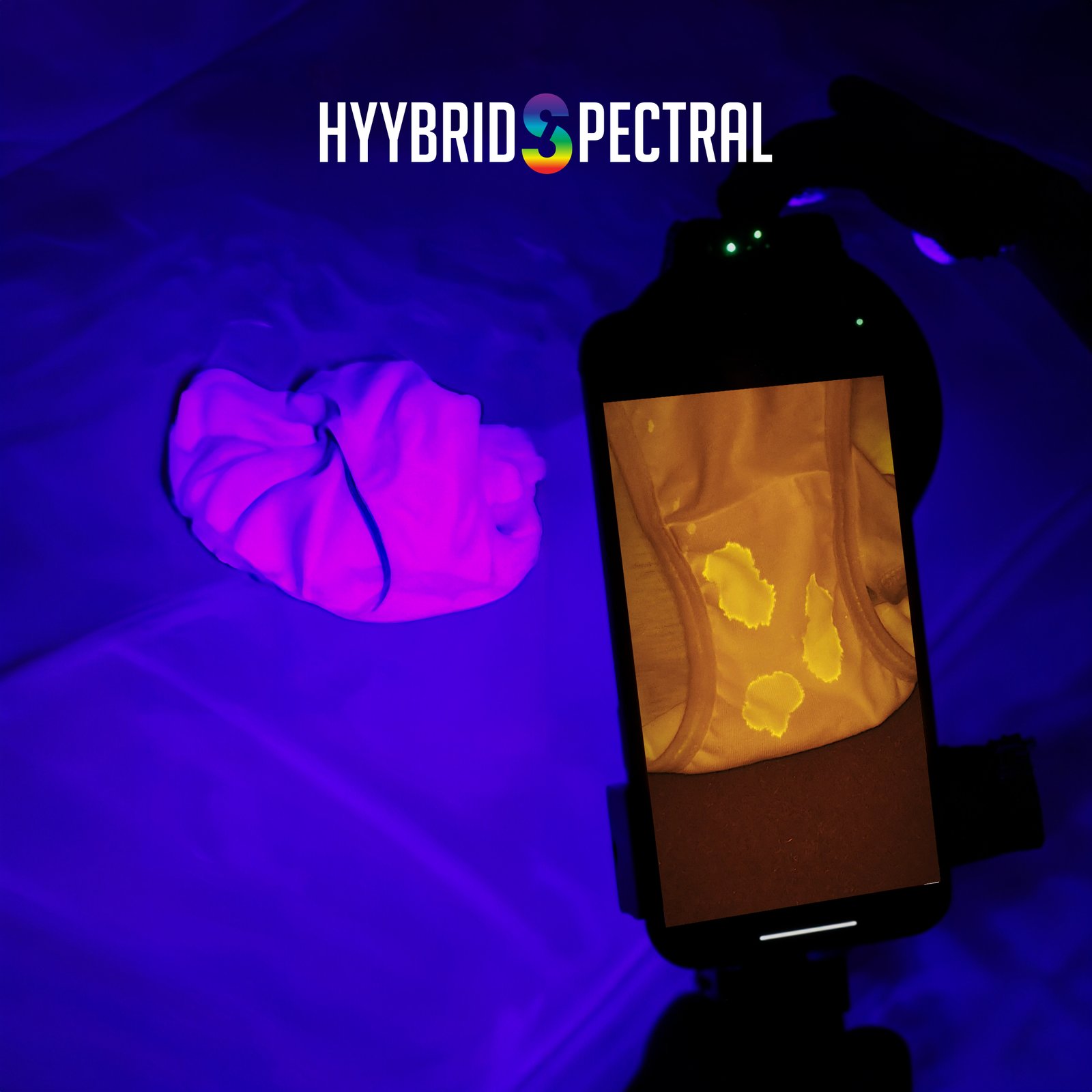
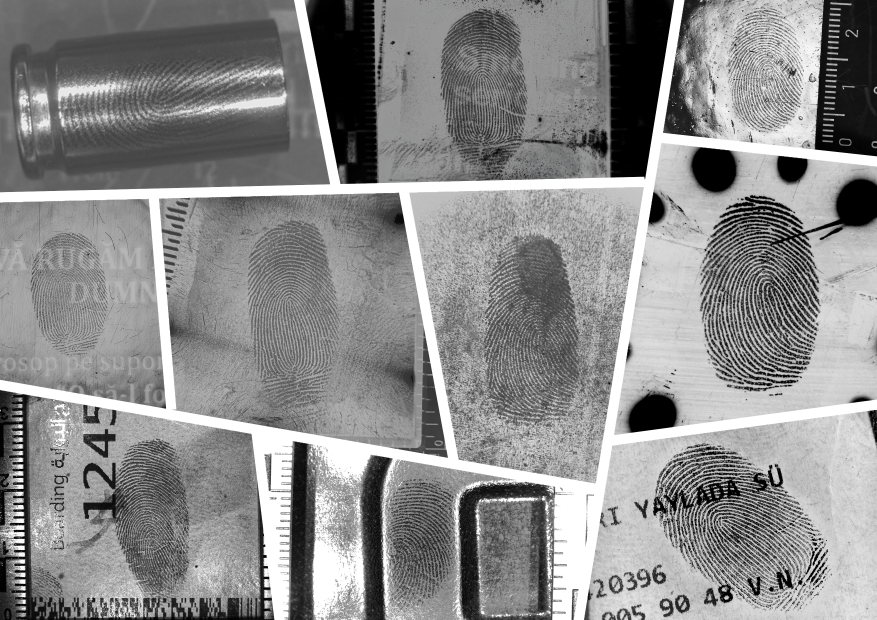
In forensic investigations, not every piece of evidence is immediately visible to the naked eye. This is especially true in complex scenes involving fire, explosions, decomposition, burial, water exposure, fragmentation, or severe environmental contamination. Small bone and tooth fragments may easily blend into soil, ash, stones, plastics, textiles, vegetation, or other background materials. However, these fragments can be highly valuable for both crime scene investigation and human identification.
This is where multispectral imaging devices such as HyybridSpectral can provide significant support. By using different light and filter combinations, multispectral systems can help distinguish bone and dental materials from their surrounding background.
The Importance of Bone and Tooth Detection in Forensic Science and DVI
Bones and teeth are among the most durable biological structures in the human body. Even when soft tissues are degraded, burned, or completely lost, skeletal and dental remains may still be preserved. For this reason, the detection of bone and tooth fragments is a crucial step in forensic anthropology, forensic odontology, and Disaster Victim Identification, also known as DVI.
DVI is a systematic process used to identify deceased individuals after mass fatality incidents such as natural disasters, aircraft crashes, explosions, fires, or terrorist attacks. In these situations, visual recognition is often unreliable. The external appearance of the body may be altered by trauma, burning, fragmentation, or advanced decomposition. Therefore, identification must be supported by scientific methods such as dental records, DNA analysis, and fingerprint comparison.
Teeth are particularly valuable in this process. Fillings, crowns, bridges, implants, root canal treatments, missing teeth, restoration patterns, and jaw structures can provide highly individual information. Even a small dental fragment recovered from a scene may later provide important postmortem data that can be compared with antemortem dental records.
Bone evidence is also important. Skeletal remains may help determine whether the material is human or non-human, estimate biological profile, assess trauma, and understand the context of the scene. However, before any of these analyses can be performed, the material must first be located, documented, and recovered without unnecessary contamination or loss.
What Are Multispectral Imaging Systems?
Multispectral imaging is an imaging approach that examines a material under different regions of the electromagnetic spectrum, rather than only under visible white light. These regions may include ultraviolet, violet, blue, green, red, and infrared wavelengths. Different materials interact with light in different ways. Some absorb specific wavelengths, some reflect them, and some may emit fluorescence when excited by a certain light source.
In these systems, the filter is just as important as the light source. While the light source excites the material, filters help block unwanted reflected light and allow the desired emission or contrast difference to be seen more clearly. For example, a material excited with blue light may emit fluorescence at a longer wavelength. In this case, an orange or yellow barrier filter can suppress the reflected blue light and make the fluorescence easier to observe.
The advantage of devices such as HyybridSpectral is that they allow investigators to test different light and filter combinations within a single system. This makes it possible to observe the same material under multiple spectral conditions. Even if a bone or tooth fragment blends into the background under normal visible light, it may appear brighter, darker, or more contrasted under the appropriate spectral combination.
The Role of Light and Filter Combinations in Bone and Tooth Detection
The detectability of bone and tooth materials under multispectral imaging is related to their optical properties. Bone tissue consists of both mineral and organic components, while teeth include enamel, dentin, cementum, and sometimes dental restorative materials. These structures may show different reflectance or fluorescence behavior compared with surrounding materials.
In forensic studies, blue light combined with an orange filter has often been reported as an effective approach for distinguishing bone and tooth fragments from non-bone materials. However, every scene is different. Burned bone, submerged remains, soil-contaminated fragments, or materials affected by environmental exposure may respond differently to light. Therefore, relying on a single wavelength and filter combination may not be sufficient. A systematic examination using multiple light and filter options is a more reliable approach.
In this context, multispectral imaging supports the search, differentiation, and documentation stages of forensic work. The device can help the investigator notice suspicious areas more efficiently, but the final determination of whether the material is bone, tooth, human, or non-human must be made by the appropriate forensic specialist. Therefore, multispectral imaging should be considered a supportive tool that works together with confirmatory laboratory and expert analyses.
Why Identification Matters After Detection
Finding bone or tooth fragments is only the first step. The main objective is to determine whether these findings can be scientifically associated with a specific individual. In DVI operations, identification is not only a technical process; it also has humanitarian, legal, and social importance. It helps families receive answers, supports legal procedures, enables the issuing of death certificates, and allows the deceased to be treated with dignity.
In dental identification, postmortem findings are compared with antemortem dental records created during the person’s lifetime. These records may include dental charts, radiographs, restoration information, implant data, prosthetic records, missing teeth, and anatomical features. During the comparison process, consistencies and inconsistencies are evaluated. If there are enough distinctive and compatible features, the identification may be supported. If there are major unexplained discrepancies, a possible identity may be excluded.
For bone evidence, the process may involve a broader forensic anthropological examination. Experts may assess whether the remains are human or animal, estimate the minimum number of individuals, evaluate age, sex, stature, trauma, and taphonomic changes. Bone and tooth samples may also provide valuable biological material for DNA analysis, especially in cases involving advanced decomposition, burning, or fragmentation.
For this reason, the initial detection of bone and tooth fragments through multispectral imaging can be seen as the starting point of the identification chain. Accurate detection supports proper recovery, labeling, documentation, and laboratory referral.
How HyybridSpectral Can Support the Process
HyybridSpectral’s multispectral imaging capability allows forensic professionals to observe how different materials respond under various light sources and filters. In bone and tooth searches, this can be particularly useful in complex backgrounds or low-contrast scenes.
One of the key advantages is that the examination can be performed in a contactless and non-invasive manner. Potential human remains can be visualized and documented before being moved or collected. This helps preserve the original position of the evidence and supports the integrity of the scene documentation.
Another advantage is the ability to compare different spectral combinations quickly. The investigator can examine the same area under visible light, UV, blue light, and other wavelength ranges, while using different filters to enhance contrast. This approach may reduce the risk of overlooking small bone or tooth fragments.
However, the role of the device should be clearly defined. HyybridSpectral is not an identification tool by itself. It is an imaging and documentation system that can strengthen the detection stage. The identification process must still be completed through forensic odontology, forensic anthropology, DNA analysis, and established DVI protocols.
Conclusion
Bone and tooth evidence can be extremely valuable in forensic science and DVI because it may provide the first step toward human identification. However, these materials are not always easy to detect. Complex scenes, burning, fragmentation, environmental contamination, and low contrast can make small fragments difficult to see with the naked eye.
Multispectral imaging systems help reveal optical differences that are not visible under normal white light. By using different light and filter combinations, devices such as HyybridSpectral can support the search, visualization, and documentation of bone and tooth fragments.
Ultimately, multispectral imaging does not replace expert analysis or confirm identity on its own. Instead, it strengthens the first and critical stage of the forensic workflow: detecting the right evidence, documenting it properly, and guiding it toward the correct identification process.